ChatGPT becomes an advertising platform: new playing field, new rules
Today, ChatGPT creates practical, creative, and ultimately economic value for numerous SMEs on a daily basis. With OpenAI’s announcement that their platform will soon display advertisements, a wealth of new commercial opportunities will undoubtedly open up soon. What can you expect?
From SEA to GEA
It was written in the stars that after the shift from SEO to GEO, online advertising would also find its way to AI-generated search engines. That time has now arrived.
With the integration of ads into ChatGPT, OpenAI is naturally aiming for fresh revenue to keep their future developments in artificial intelligence viable—read: affordable.
In addition, they emphasize that this new step is also necessary to keep their platform broadly accessible in the long term. This ensures that not everyone has to purchase a paid subscription to continue using everything ChatGPT has to offer.
What will it look like?
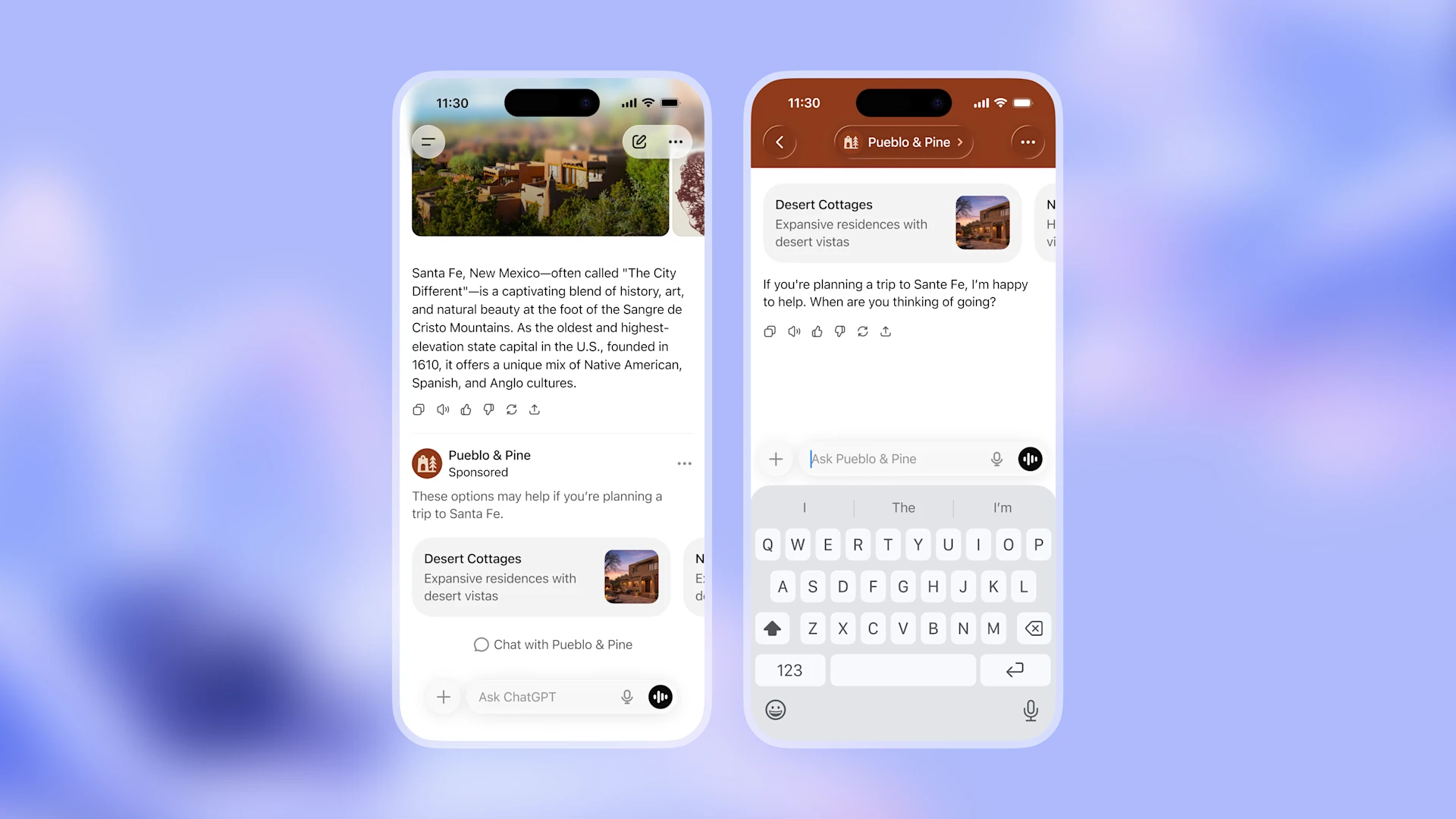
Specifically, OpenAI is testing two types of advertisements (see screenshots) among users of the free ChatGPT version and ChatGPT Go in the United States:
- Product advertisements;
- Advertisements for services and stays.
These are subtle advertisements that do not take up much space and are always placed below the provided AI response. They are also clearly marked with the label sponsored, so there is no possible confusion between objective and paid content.
“If it doesn't add value, it doesn't belong there”
Despite the fact that the top executive behind AI was originally not keen on launching ads in ChatGPT, it now seems to be happening. However, there is a big “but”: they must be reliable, both in terms of content quality and privacy guarantees. To put it in their own words: “If it doesn’t add value, it doesn’t belong there.” They translated this into four central principles:
- Transparency: ads must always be recognizably marked as advertisements;
- Relevance: no series of standard ads, only concrete recommendations that provide real added value in the user’s customer journey;
- User control: the user has a say in how and if ads appear;
- Privacy first: personal data is not resold to third parties.
Simply being present is no longer enough
How all these new developments will translate into your future paid search strategy remains to be seen. Regardless, what has been confirmed once again is that paid online visibility no longer depends on the largest advertising budgets and choosing the right search terms. Instead, it depends on who is relevant enough to fit into the suggested sponsored answer. And that offers enormous possibilities, provided there is correct positioning and approach.
Don't want to take a wait-and-see approach with AI?
ChatGPT will not become a copy of Google Ads or advertisements via traditional social media channels. We are dealing with a different ecosystem, including new rules of the game. And above all: with different expectations from the end user.
At Expliciet, we are naturally following these developments with extra attention. Understand to stand out, so we can hit the ground running as soon as the lights turn green. Want to brainstorm with us already? Don’t hesitate to invite us to the table. One short email is all it takes!