Online advertising: up to speed with the basics in five minutes
Are you getting lost in the sea of online advertising options? Do you think SEA is some kind of medical condition? In just five minutes, I’ll guide you through the four most popular forms of online advertising, so you can make better choices for your company’s marketing.
1. Social advertising
In short: advertising on a social media platform.
In detail: you pay a social media platform and, in return, you get more visibility for your post or ad. For example, you can increase the reach of posts on your business page or create a separate campaign—to get that one job vacancy out into the world, for instance. Besides greater reach, you can of course also advertise with the goal of getting more clicks, leads, or sales.
Why is it interesting…? Because Facebook, LinkedIn, Pinterest, Instagram, and others each have a more or less defined target audience who use that platform for a specific reason. LinkedIn is for highly educated and ambitious professionals. Pinterest is for getting inspired for an (important) purchase. While that’s a bit of a generalization, of course, remember that there will always be a platform that is better suited for your product and your marketing goals.
Because with this method of online advertising, you have a choice of different formats: text, images, video…
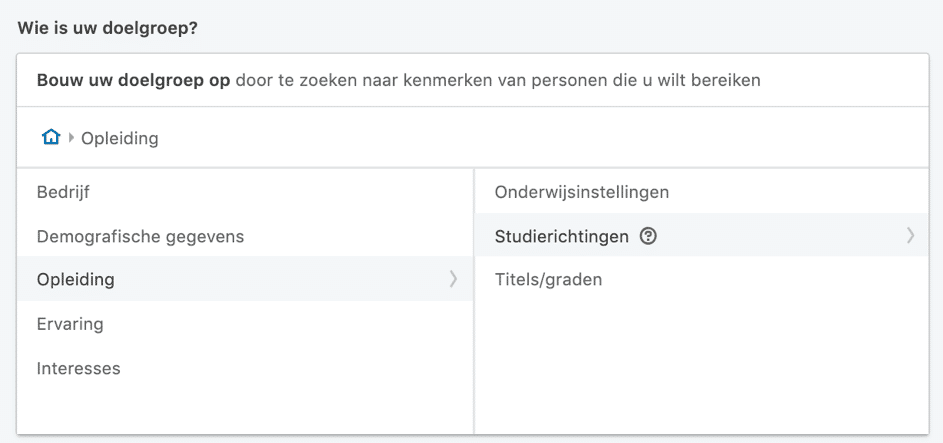
Because on every social media platform, you can use very precise targeting. Here is an example of some of the possibilities within LinkedIn.
2. SEA
In short: not a disease, but paid advertisements in Google or Bing search results.
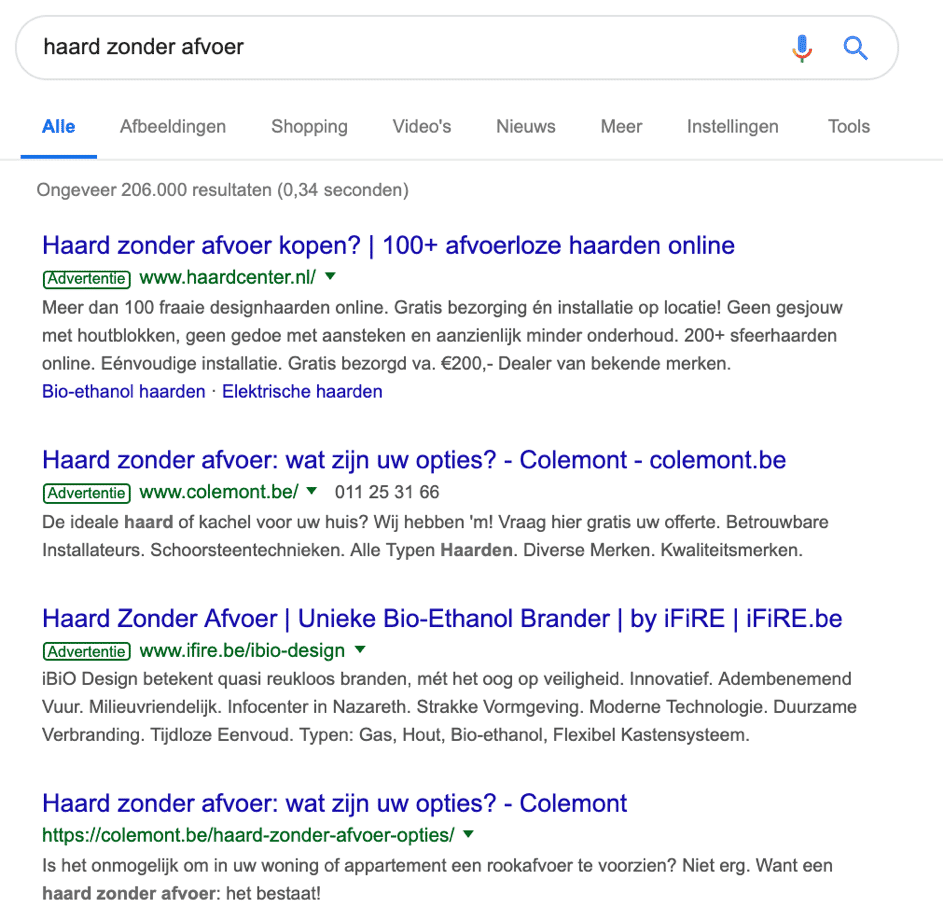
In detail: the ads you see at the very top of your search results. And I mean right at the ve-ry top. Even above the organic ones. You compete based on the search term, your website or landing page, the ad, and of course, the bid. The most relevant ad gets the best spot.
Why is it interesting? Because with this type of online advertising, you can be super relevant and respond effectively to your customers’ needs. Your brand appears at the exact moment your customer is practically ready to buy.
Someone searches for Install wooden terrace and voilà, the link to your DIY system appears. An example of an SEA campaign for our client Colemont:
3. Remarketing
In short: online ads that follow you… everywhere you browse. The most famous ‘stalkers’ are undoubtedly Booking.com and Zalando. Or did you think it was a coincidence that that specific city trip or pair of shoes suddenly pops up in your ads?
In detail: as soon as someone visits your website (or a specific page), they will see your products and/or services on other websites as well. This happens via advertising spaces offered by those other sites, which are sold to the highest bidder.
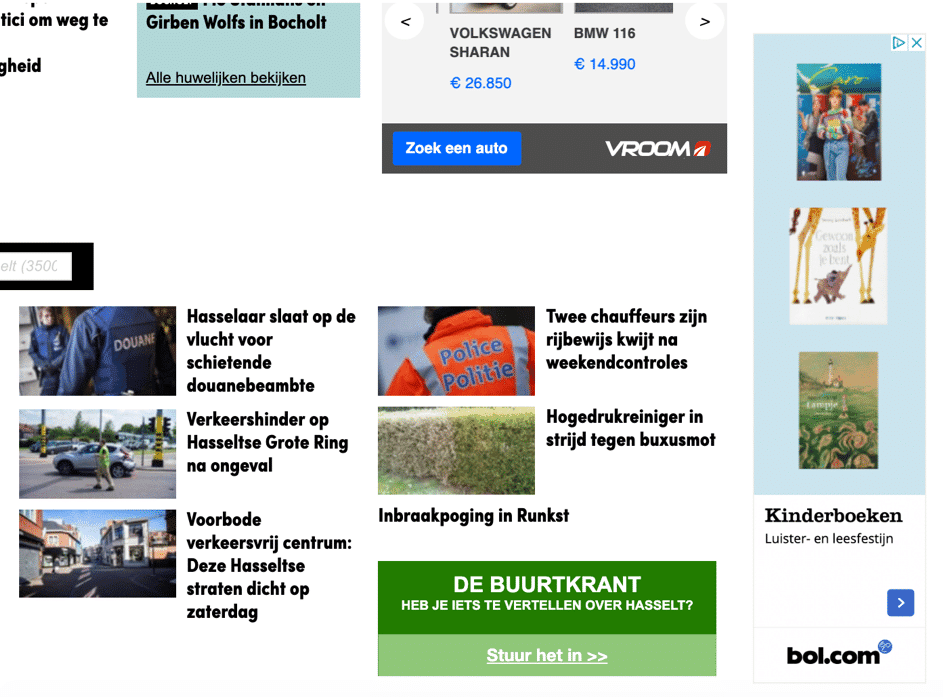
Why is it interesting? Because it keeps you top of mind. Searching for a gift for your godchild yesterday, and today a Bol.com remarketing campaign is right under your nose on this news site.
Because the possibilities are extensive. You choose the frequency yourself, and you can decide which dynamic space to bid on depending on your budget. With one simple rule of thumb: the larger and more prominent the ad on that other website, the more you have to pay.
Our tips:
- A perfect way of online advertising for longer purchasing journeys and service sales.
- Interesting for job vacancies. This way, you stay on the radar of someone who visited your careers page… but hasn’t made the decision yet.
- Finding the right frequency is key. It’s OK to follow someone with what is relevant to them, but when it starts to look like stalking, it just becomes annoying. And even a little creepy.
4. Online advertising via banners
In short: The digital version of buying advertising space in a newspaper, magazine, or trade journal…
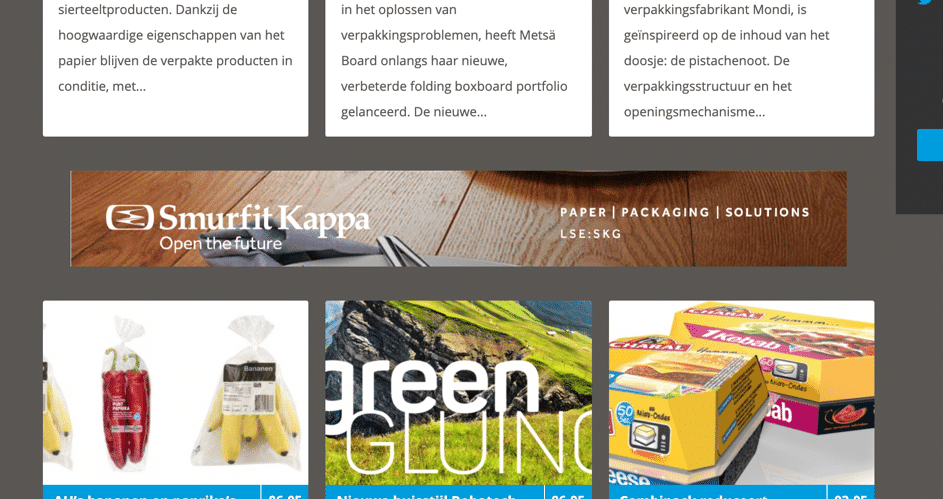
In detail: A website makes advertising space available—at the very top, within the content, at the bottom… and in various formats, from full-screen to thumbnails. You can book one or more positions for a fixed period. Like SmurfitKappa did below on VerpakkingsManagement.nl, the website of a trade magazine for the packaging industry.
Why is it interesting? Because you can go as broad or as specific as possible based on the websites you select.
Because, unlike a print ad, the result is measurable. With this form of online advertising, you can see exactly how many views or clicks your investment has generated.
Because you benefit from the reputation of the website you advertise on. Advertising for a business loan on Tijd.be? Then your potential customer gets a completely different impression of your company than if that ad were running on a tabloid site.
Our tips:
- Ask the seller what an ad in that position typically generates over that specific period. That gives you an initial guideline on whether it’s worth your investment. And if the numbers are disappointing, you’ll know it’s likely due to the ad itself, allowing you to adjust it for next time.
- Ideal for short-term campaigns and promotions.
Want to know more about online advertising?
Jan tells you even more in the video below.